
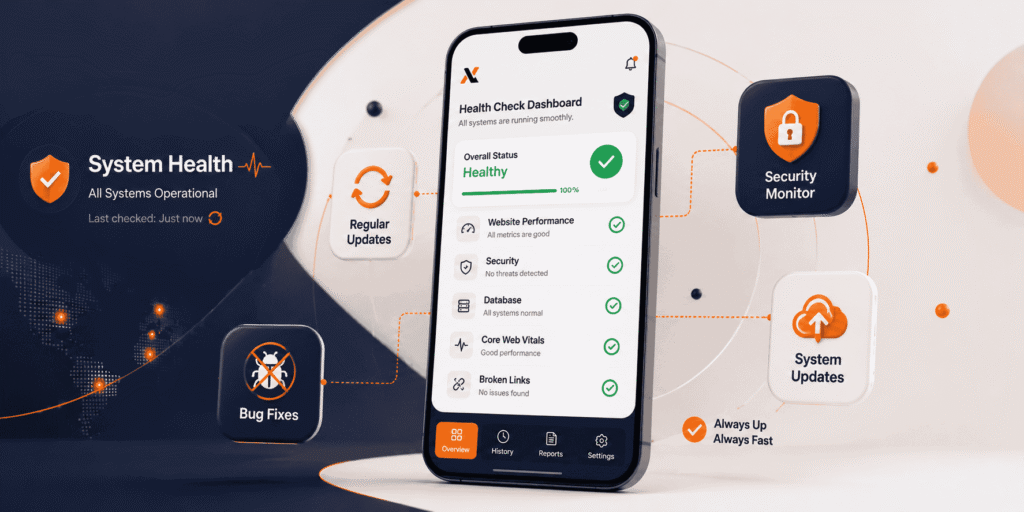
Mobile app maintenance is the ongoing work required to keep a mobile app functioning correctly after launch, including fixing bugs, updating the app for new iOS and Android operating system versions, patching security vulnerabilities, and keeping the app compliant with App Store and Google Play policies. Unlike a website, a mobile app can silently break the moment a phone’s operating system updates, which is why maintenance is treated as an ongoing requirement rather than a one-time task.
Why Mobile App Maintenance Is Different From Website Maintenance
A website lives entirely under your control. If you don’t touch it, it generally keeps working the same way indefinitely. A mobile app does not have that luxury. It runs inside an operating system that Apple and Google update constantly, on hardware that changes every year, and inside an app store that can remove your app for policy violations you didn’t even know had changed.
This is the core reason mobile app maintenance exists as its own discipline. It’s not just “fixing things when they break.” It’s the ongoing work of keeping an app compatible with a platform that keeps moving underneath it.
What Mobile App Maintenance Actually Includes
Maintenance typically breaks down into a few distinct categories, each addressing a different kind of risk to the app.
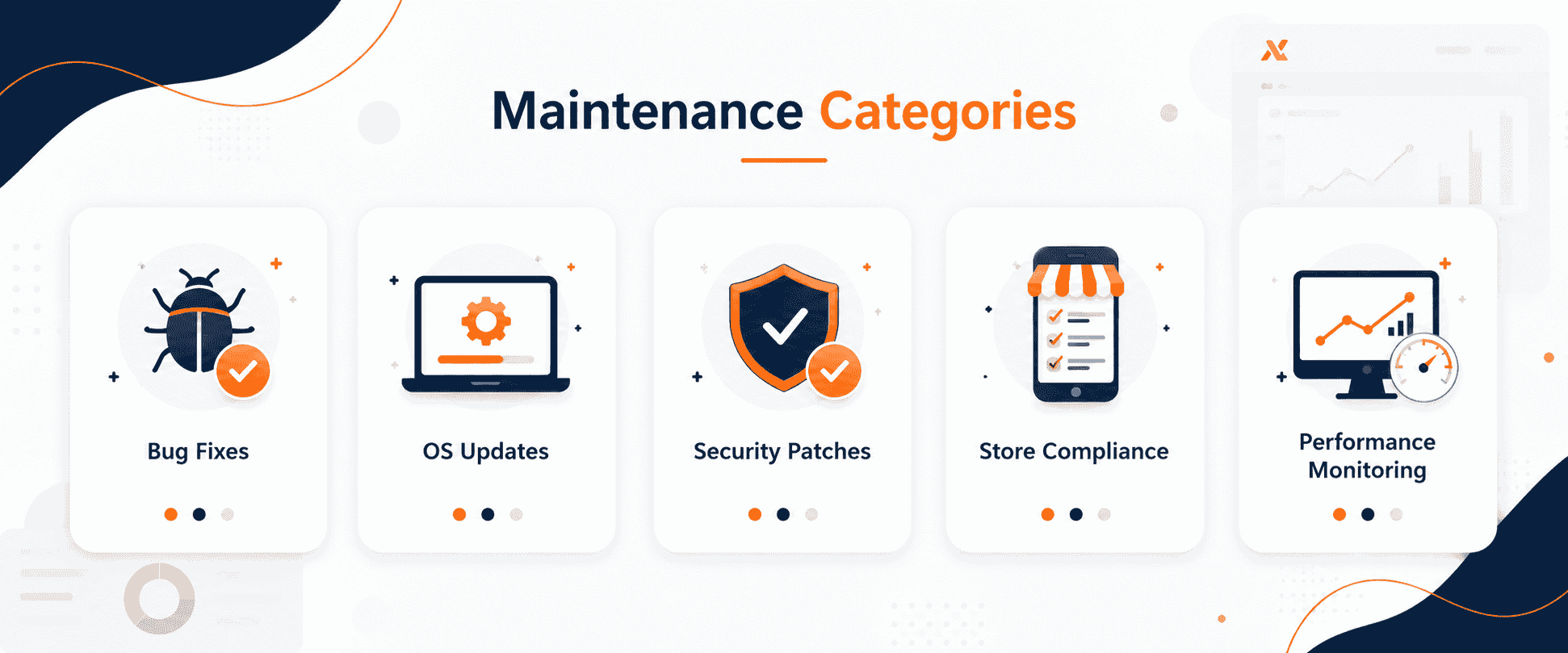
Bug Fixes
Even a well-tested app has issues that only appear once real users, with real devices and real usage patterns, start using it. Ongoing bug tracking and fixes are the most visible part of maintenance, the crashes and glitches users actually notice and report.
Operating System Compatibility Updates
When Apple releases a new iOS version or Google releases a new Android version, apps need to be tested and often updated to keep working correctly. Skipping this step is one of the most common reasons apps quietly start crashing for a portion of users without any obvious cause.
Security Patches
New vulnerabilities in libraries, frameworks, and dependencies are discovered regularly. An app that handles login credentials, payment details, or any personal data needs these patched promptly, not left until the next planned feature release.
App Store and Google Play Compliance
Both Apple and Google update their submission guidelines and data-safety requirements on an ongoing basis. An app that passed review last year can be rejected on its next update if it hasn’t been kept aligned with current policy, particularly around permissions and data handling.
Performance Monitoring
Load times, crash rates, and battery usage all tend to drift over time as an app accumulates small inefficiencies. Performance monitoring catches this drift before it becomes visible enough that users start leaving negative reviews.
What Happens If You Skip Maintenance
The consequences of skipping maintenance rarely show up immediately, which is exactly what makes it easy to deprioritize until it becomes a real problem.
| Without Maintenance | With Regular Maintenance |
|---|---|
| App gradually breaks on new OS versions | Compatibility tested and fixed proactively |
| Security vulnerabilities remain unpatched | Patches applied on a regular cycle |
| Risk of removal from App Store or Play Store | Store policy compliance maintained continuously |
| Performance quietly degrades over time | Issues caught through active monitoring |
| User trust erodes through crashes and bugs | Stable experience protects app store ratings |
How Much Does Mobile App Maintenance Cost?
As a general industry guideline, annual maintenance typically costs somewhere between 15 and 20 percent of the original app development cost, though this varies significantly based on how actively the app is used and how complex it is. An app with a small, steady user base and simple functionality needs far less ongoing attention than one processing payments, handling sensitive data, or serving a large, growing audience.
Most maintenance providers offer tiered plans, from basic OS-compatibility coverage up to full 24/7 critical-response support, so the right level depends on how business-critical the app actually is. See our own mobile app maintenance services for how this breaks down in practice.
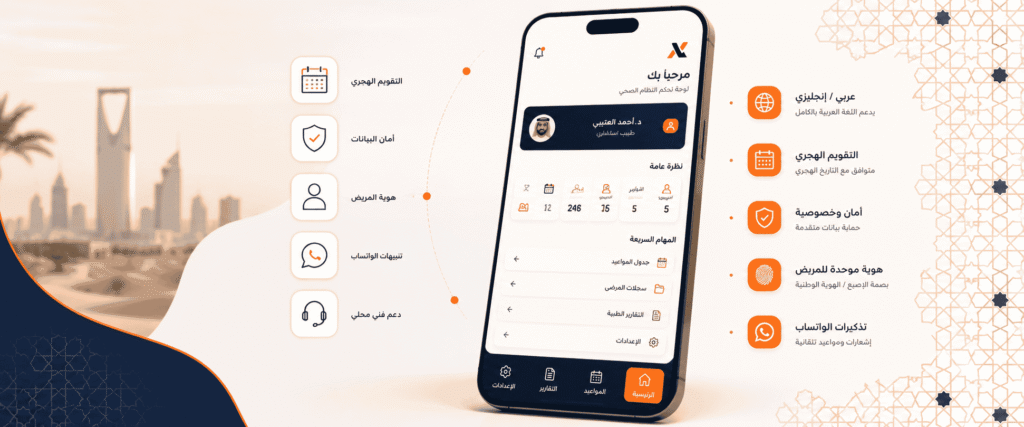
Mobile App Maintenance in Saudi Arabia: What’s Different
Maintenance for apps serving the Saudi and Gulf market carries a few considerations that generic global guidance doesn’t cover.
- PDPL compliance: Apps handling personal or payment data need ongoing attention to Saudi data protection requirements, not just Apple and Google’s global policies.
- Arabic RTL regression testing: Every OS update carries a real risk of breaking right-to-left layouts in ways that English-only testing simply won’t catch.
- Seasonal load planning: Ramadan, Hajj, and major retail events can multiply traffic overnight, which needs to be planned for in advance, not discovered the hard way when the app slows down or crashes.
- Local payment gateway monitoring: Apps integrated with Mada or other regional payment methods need those integrations actively monitored, since a silent payment failure directly costs revenue.
In-House vs Outsourced Maintenance
Some larger organizations keep a small internal team dedicated to app maintenance, particularly when the app is core to daily operations. For most businesses, though, outsourcing maintenance to the same team that understands the app’s architecture, or a dedicated maintenance provider, is more cost-effective than hiring and retaining in-house mobile specialists purely for upkeep work. This is especially true for businesses whose app was built through a mobile app development company, where continuity between the original build team and the maintenance team avoids the ramp-up time a new team would need.
Maintenance Across Platforms
What maintenance actually involves varies slightly by platform. Native Android apps and native iOS apps each have separate codebases needing separate testing and updates. Apps built with a cross-platform framework like Flutter can often be maintained more efficiently, since a single update cycle covers both platforms at once rather than doubling the maintenance workload.
Signs Your App Needs Maintenance Right Now
A few warning signs tend to show up before an app’s problems become serious enough for users to notice on their own.
- Crash reports are climbing. A gradual increase in crash rate, even a small one, usually points to a compatibility issue building up rather than a one-off bug.
- The last update was over 6 months ago. Given how often Apple and Google release OS updates, an app untouched for half a year is likely already drifting out of compatibility.
- Users are reporting the same issue repeatedly. Recurring complaints in app store reviews are one of the clearest signals that a known bug hasn’t been addressed.
- The app was rejected on a routine resubmission. This almost always means a store policy changed and the app wasn’t updated to match it.
- Load times have quietly gotten slower. Performance drift often happens gradually enough that no single update seems responsible, but the cumulative effect is real.
None of these signs mean something is catastrophically wrong. They mean maintenance has fallen behind, and catching it at this stage is far cheaper than waiting for a crisis.
How to Choose a Mobile App Maintenance Plan
The right maintenance level depends mostly on how business-critical the app actually is, not just its size. A simple internal tool used by a handful of staff needs far less active monitoring than a customer-facing app processing daily transactions. When evaluating a plan, it’s worth asking specifically what’s included: is OS-compatibility testing proactive or reactive, are security patches applied on a schedule or only when something breaks, and is store resubmission handling included or billed separately. These details matter more than the headline price.
Frequently Asked Questions
What is mobile app maintenance?
Mobile app maintenance is the ongoing work of keeping an app functional after launch, including bug fixes, OS compatibility updates, security patches, and app store policy compliance.
How often should a mobile app be updated?
Major OS-compatibility updates are typically needed a few times a year, aligned with Apple and Google’s release cycles, while security patches are generally recommended on a monthly basis.
What happens if I don’t maintain my app?
The app gradually loses compatibility with newer OS versions, can face removal from app stores for policy violations, and becomes more vulnerable to security issues over time.
Is mobile app maintenance included in the original development cost?
Usually not. Development typically covers building and launching the app, while maintenance is a separate, ongoing cost, commonly estimated at 15-20% of the original build cost annually.
Can I switch maintenance providers if someone else built my app?
Yes. A new provider will typically start with a codebase audit to understand the app’s architecture before taking over ongoing maintenance.
Does maintenance include adding new features?
Basic maintenance plans usually cover fixes and updates only. Adding new features is generally a separate scope, though some maintenance plans include minor feature updates.
Do cross-platform apps need less maintenance than native apps?
Often, yes. A cross-platform app built with something like Flutter shares one codebase across Android and iOS, so a single update cycle can cover both platforms rather than maintaining two separate codebases.
Need Ongoing Maintenance for Your App?
From bug fixes to Saudi-specific compliance, we keep iOS and Android apps running reliably. See our full mobile app maintenance services or get in touch to discuss your app.Get a Free App Audit
