Mobile app users want speed, reliability, and a seamless experience on every device. Businesses face an important choice: should they build separate native apps for Android and iOS, or create one app that works everywhere? Many companies, especially those seeking Dallas app development services, also want a solution that balances quality with efficiency.
This is where cross-platform and hybrid mobile app development become essential. Both offer cost-effective and efficient ways to build apps that reach wider audiences without sacrificing performance.
What is Cross-Platform App Development?
Cross-platform app development means building one app that runs smoothly on multiple operating systems, like Android and iOS. Instead of creating separate codebases for each platform, developers write one version that adapts across all.
Popular frameworks for cross-platform app development include:
- Flutter (by Google)
- React Native (by Meta)
- Ionic
- Xamarin
- NativeScript
Each of these frameworks helps deliver consistent design, functionality, and performance across devices.
our project today.
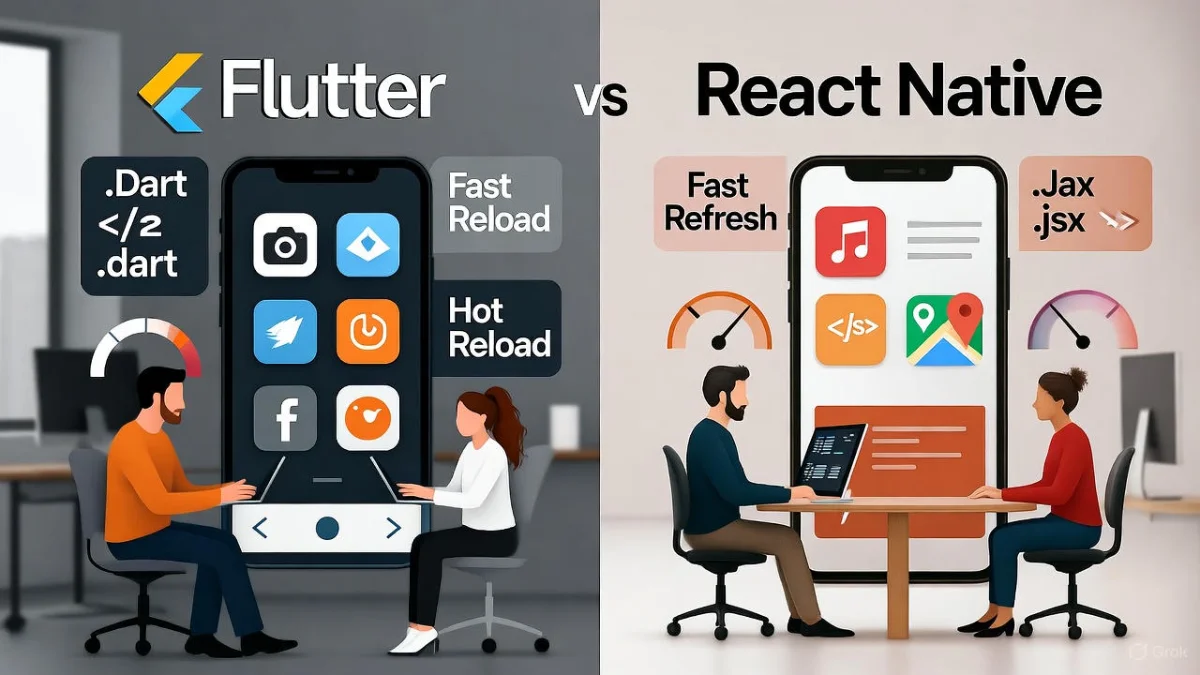
Popular Cross-Platform Frameworks
-
Flutter (by Google)
Flutter uses the Dart programming language. It includes everything needed to build apps for Android, iOS, desktop, and web from one codebase.Why Developers Prefer Flutter:
-
Fast development with hot reload
-
High-performance rendering engine (Skia)
-
Rich set of customizable widgets
-
Smooth animations and UI consistency
-
-
React Native (by Meta)
React Native is based on JavaScript and React. It combines the simplicity of web development with native performance.Advantages:
-
Reusable components across platforms
-
Close-to-native performance
-
Large community support
-
Easy integration with native modules
-
-
Xamarin (by Microsoft)
Xamarin uses C# and .NET, making it ideal for enterprises using Microsoft technologies.Key Benefits:
-
Access to native APIs
-
Strong backend integration with .NET
-
Shared business logic across platforms
-
Long-term stability
-
-
Ionic
Ionic combines web technologies like HTML, CSS, and JavaScript to create mobile apps. It’s a lightweight solution for hybrid and cross-platform projects.Highlights:
-
Works well with Angular, React, and Vue
-
Quick prototyping
-
Simple maintenance
-
Large plugin library
-
-
NativeScript
NativeScript allows developers to access native device APIs directly using JavaScript or TypeScript, giving near-native performance without web views.Advantages:
-
True native performance
-
Access to device hardware
-
Full native UI support
-
What Is Hybrid Mobile App Development?
Hybrid app development blends web and native technologies. Developers use web tools like HTML, CSS, and JavaScript to create apps, then wrap them in a native shell that allows access to mobile features such as camera, GPS, and push notifications.
A hybrid app behaves like a native app but runs inside a web container. This method is popular for projects that need quick development, simpler updates, and cross-platform reach.
Benefits of Hybrid App Development:
-
Faster to build and deploy
-
Lower development cost
-
Easy maintenance
-
Works on multiple devices
-
Reuses web development skills
Cross-Platform vs Hybrid App Development
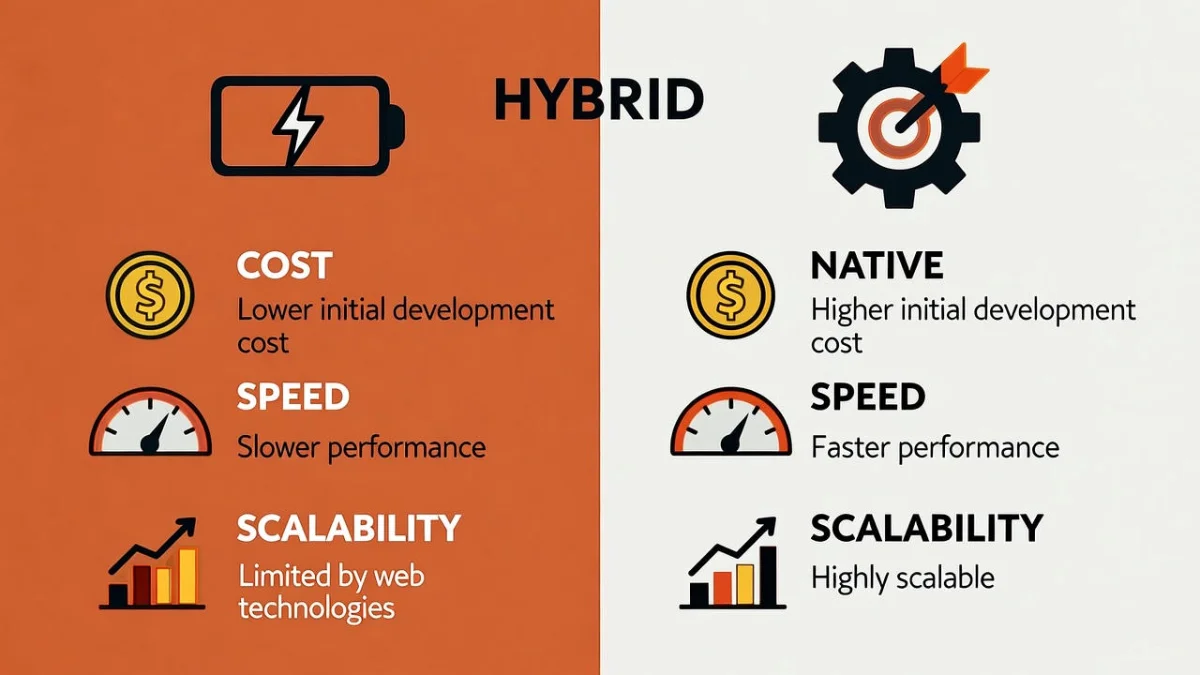
Both cross-platform and hybrid approaches reduce cost and speed up development, but they differ in technology, performance, and scalability.
| Feature | Cross-Platform Apps | Hybrid Apps |
|---|---|---|
| Technology Used | Frameworks like Flutter, React Native | Web tools like HTML, CSS, JavaScript |
| Performance | Near-native | Moderate, depends on web rendering |
| User Experience | Smooth and consistent | Slightly limited for heavy animations |
| Maintenance | Easy with shared code | Easy but depends on web wrapper |
| Cost | Moderate | Lower |
| Best For | Large, feature-rich apps | Startups, MVPs, or content apps |
Cross-platform apps are better for businesses that want high performance and scalability. Hybrid apps are ideal for startups or projects with limited budgets and simpler functionality.
Why Businesses Choose Cross-Platform Development
The global app market demands apps that perform equally well on both Android and iOS. Cross-platform development offers several advantages for businesses aiming for wide reach and efficient operations.
1. Faster Time to Market
Using a single codebase speeds up development, allowing quicker app launches.
2. Lower Development Cost
Companies save up to 40% by avoiding separate native builds.
3. Simplified Maintenance
Bug fixes and updates can be deployed simultaneously on all platforms.
4. Consistent Design
Uniform UI and UX across devices strengthen brand consistency.
5. Scalable Architecture
Modern frameworks like Flutter and React Native support enterprise-level scalability.
Why Developers Use Hybrid App Development
Hybrid apps appeal to teams that value flexibility and simplicity. They are efficient when you want to release a product quickly or validate an idea before investing in a full native or cross-platform version.
Top Reasons for Choosing Hybrid Apps:
-
Easy to develop using familiar web languages
-
Faster testing and iteration
-
Simple updates through web technologies
-
Ideal for apps with less hardware dependency
Best Use Cases:
-
MVPs (Minimum Viable Products)
-
Business or informational apps
-
Content-based apps (blogs, news, magazines)
-
E-commerce catalogs
Detailed Look at Key Frameworks
1. Flutter
Flutter provides native performance with a flexible UI system. It compiles directly to ARM machine code, which results in smoother execution.
Top Companies Using Flutter:
-
BMW
-
eBay Motors
-
Google Pay
-
Reflectly
Notable Features:
-
Supports Material Design and Cupertino widgets
-
Unified UI on all devices
-
Strong community and frequent updates
2. React Native
React Native bridges web and native development. Developers write JavaScript code that communicates with native components through a bridge.
Top Companies Using React Native:
-
Instagram
-
Walmart
-
Uber Eats
-
Discord
Advantages:
-
Component-based architecture
-
Access to third-party plugins
-
Easy integration with APIs
-
Strong open-source ecosystem
3. Ionic
Ionic uses web views but provides near-native user experience. It’s ideal for startups focusing on early deployment.
Strengths:
-
Extensive UI component library
-
Integrates with Capacitor and Cordova
-
Supports Progressive Web App (PWA) development
4. Xamarin
Enterprises choose Xamarin for reliability and integration with existing Microsoft systems. It compiles to native binaries, improving performance over traditional hybrid apps.
Highlights:
-
Full Visual Studio integration
-
Reusable .NET libraries
-
Access to device hardware
5. NativeScript
NativeScript eliminates the need for web views, using direct access to platform APIs.
Advantages:
-
Real native UI rendering
-
Full hardware integration
-
Supports JavaScript, TypeScript, and Angular
Cost Comparison: Native vs Cross-Platform vs Hybrid
| Development Type | Estimated Cost | Maintenance | Time to Market |
|---|---|---|---|
| Native (iOS + Android) | High | High | Slow |
| Cross-Platform | Moderate | Low | Fast |
| Hybrid | Low | Low | Fastest |
For small and medium-sized businesses, hybrid or cross-platform solutions can reduce overall project costs by 40–60%.
Performance and Scalability Factors
Performance often depends on how apps interact with device APIs and manage resources.
-
Cross-platform apps achieve near-native performance using compiled code and native widgets.
-
Hybrid apps depend on web rendering engines, which may reduce performance in heavy animations or complex graphics.
Scalability also favors cross-platform frameworks. Flutter and React Native allow easy integration with backend systems and cloud services like Firebase or AWS.
Common Myths and Misconceptions
Myth 1: Cross-platform apps are slow.
Reality: Modern frameworks compile to native code, achieving near-native performance.
Myth 2: Hybrid apps can’t use native features.
Reality: Plugins and APIs enable hybrid apps to access features like camera, GPS, and notifications.
Myth 3: Cross-platform apps look identical on all platforms.
Reality: Frameworks allow customization to match platform-specific design guidelines.
Challenges in Cross-Platform and Hybrid Development
-
Performance Bottlenecks
Heavy animations or complex UIs may lag on some devices. -
Plugin Compatibility
Some features require custom native modules. -
Testing Complexity
Ensuring smooth performance across different OS versions and devices takes extra testing effort. -
UI Consistency
Balancing native design expectations across platforms can be tricky.
Despite these challenges, both methods continue to evolve rapidly, narrowing the gap with native development.
The Future of Mobile App Development
Trends show a steady shift toward cross-platform and hybrid approaches. With tools like Flutter 3, React Native New Architecture, and Ionic Capacitor, the performance gap with native is closing fast.
Emerging trends include:
-
Integration with AI and machine learning models
-
Low-code and no-code hybrid builders
-
Progressive Web Apps (PWAs) merging with native experiences
-
Enhanced security and offline capabilities
The next generation of mobile apps will rely heavily on these unified development strategies to reach broader audiences efficiently.

When to Choose Each Approach
Choose Cross-Platform If:
-
You need a feature-rich, high-performance app
-
You plan to scale the product globally
-
You require strong backend and native integration
Choose Hybrid If:
-
You want to validate an idea or prototype
-
You’re building a simple or content-based app
-
You have a limited budget and timeline
Final Thoughts
Cross-platform and hybrid app development have reshaped how businesses build digital products. They make it possible to reach users faster, with less investment and broader accessibility.
The choice between the two depends on your project’s goals, timeline, and performance requirements. As frameworks evolve, both methods continue to close the gap with native development, offering faster, more scalable, and user-friendly solutions for the future of mobile innovation.
To get started, visit VirtueNetz Mobile App Development and let’s discuss your project today.
 ?>
?>
 ?>
?>
 ?>
?>
 ?>
?>