
The big war between two PHP frameworks, including CodeIgniter vs Laravel.
Long-term struggle, developers are quickly moving towards PHP and picking the PHP Frameworks to make customized projects.
PHP MVC PHP frameworks make web development faster, more secure, and easier to scale. Among them, Laravel and CodeIgniter remain the most popular choices for developers. Both offer strong performance and flexibility, but they serve different needs. This comparison will help you understand their core features, strengths, and ideal use cases so you can pick the right framework for your next project.
CodeIgniter vs Laravel
What is Laravel?
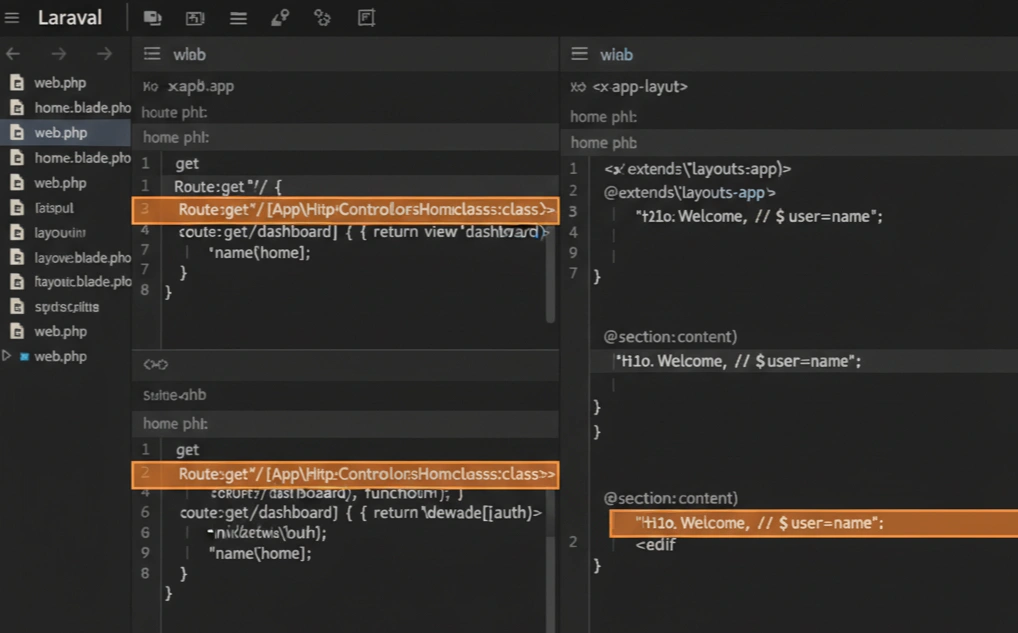
Laravel is a modern open-source PHP framework known for its clean syntax and strong community support. It simplifies common development tasks such as routing, authentication, caching, and session management.
Laravel follows the MVC pattern, which makes projects more structured and easier to maintain. It’s backed by Composer for dependency management and supports popular databases like MySQL, PostgreSQL, and SQLite. Laravel is a solid PHP structure as it keeps elaborative and exact language protocols for long-term application growth.
What is CodeIgniter?
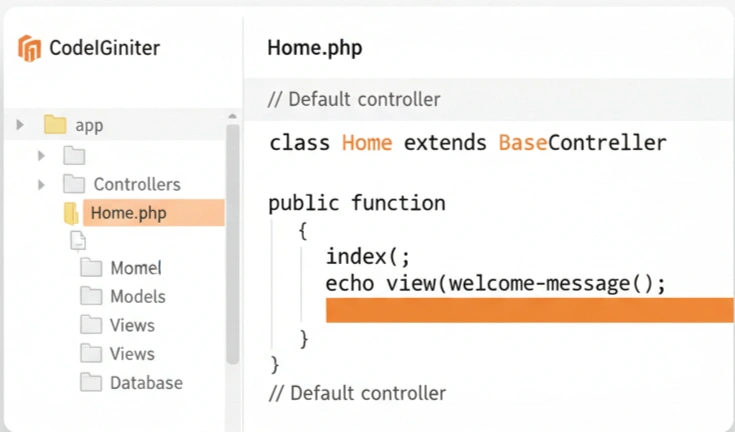
CodeIgniter is a lightweight PHP framework designed for developers who prefer simplicity and speed. It uses the MVC pattern but allows flexibility to work without strict dependencies.
CodeIgniter is known for its small footprint, fast execution time, and straightforward setup. It offers a simple toolkit for database operations, session handling, and security features, making it ideal for small to mid-scale applications.
1: Technical Comparison Factors of Laravel and Codeigniter
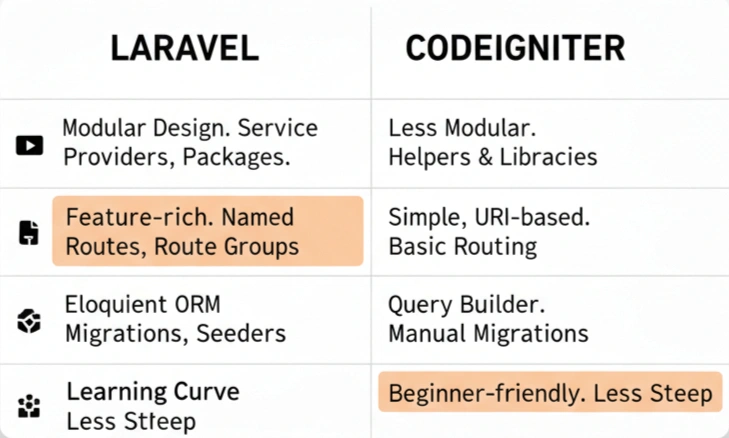
Modularity
In the world of advancement, all of us prefer rapid and stable development, and for rapid development, we divide the task of one project to our teams; this is called module-based development. Let’s come to observe who is offering module-based development.
-
Laravel: Comes with built-in modular features, allowing developers to split large projects into smaller, reusable components.
-
CodeIgniter: Doesn’t include modular functionality by default. Developers can add extensions like HMVC to enable module-based development.
Template Engine
Template Engine
The PHP layout engine is a suitable method of yielding PHP in your HTML, not utilizing PHP coding and labels. It is used to forward HTML the factors you need to show, then HTML shows this information.
-
Laravel: Includes Blade, a powerful template engine that helps create clean, dynamic views with minimal PHP code.
-
CodeIgniter: Lacks a built-in template engine, but developers can integrate third-party ones like Smarty or Twig.
Routing
Routing is the procedure of picking the best path against many networks. In a web-based application, routing is playing the role of transportation and is key to any business growth. Let’s see who is best in routing ‘Laravel Vs. CodeIgniter’.
-
Laravel: Offers expressive and flexible routing with support for route caching, grouping, and middleware.
-
CodeIgniter: Provides both implicit and explicit routing options but lacks advanced features like middleware support.
Database
The database is the prominent bone of any stable website. When we talk about Laravel and CodeIgniter database offers, it is quite impressive that both frameworks are giving advanced database options.
-
Laravel: Uses Eloquent ORM, making database interactions simple and intuitive. It supports MySQL, PostgreSQL, SQLite, and SQL Server.
-
CodeIgniter: Uses a simple Query Builder and supports multiple databases including MySQL, PostgreSQL, and SQLite. It’s fast but less feature-rich than Eloquent.
2: Maturity and Reputation
Both frameworks have been around for over a decade. Laravel has gained a stronger reputation among modern developers due to its frequent updates, active community, and extensive ecosystem. CodeIgniter, while older, is known for stability and ease of use. It remains a solid choice for projects where speed and simplicity matter more than advanced features.
3: Community Support
Laravel and CodeIgniter both have active developer communities. Laravel’s ecosystem is larger, offering regular updates, open-source packages, and tutorials. CodeIgniter has a loyal user base focused on lightweight projects and straightforward solutions.
4: Learning Curve and Advancement
Laravel provides modern development tools and frequent updates, which may take time for beginners to learn. However, these tools improve productivity for experienced developers. CodeIgniter has a gentle learning curve, making it easier for new developers to start quickly, but it lacks some of the automation and scalability features that Laravel provides.
Pros of Laravel Framework
Laravel Template:
Laravel is offering lightweight and well-managed templates that ensure stable development. Developers can freely design unique layouts on these templates, and these templates demand simple JS and CSS coding for advanced application development. Developers can even divide their layout into different chunks and easily use PHP for specific functionalities. After completing all the modules, it’s straightforward to attach them for application completion.
Laravel Libraries:
One of the most significant points before any framework selection, here in Laravel, developers can quickly call any library according to application requirements. Laravel is offering Object-oriented libraries; PHP is not offering these libraries on any other framework.
These frameworks offer different luxury features, including encryption, CSRF insurance, security, and watchword reset. On the other side, these libraries play a remarkable role in responses (sending back HTTP responses) and increasing application views. All these libraries are not only essential for stable development but also contribute to mature development.
Security:
Security is the central hub of development because every company demands stable and secure web applications for long-term comfort. Every brand’s owner prefers to implement authentic and authorized systems to secure their resources. By considering all the security demands of developers and end-users, Laravel is offering well-equipped configuration services. These services not only ensure the inner development securities but also keep an eye on unauthorized users.
Message and Mail Service
No doubt, every web application needs to grow its viewers and subscribers, and it is only possible when you alarm your targeted audience. To knock on the audience’s door, Laravel is offering the services of messages and emails in the form of notifications. Developers can add the SMTP, Mailgun, and SparkPost features in their web applications using the PHP ‘mail’ tool.
MVC Architecture:
The model view controller is one of the most inspiring features for advanced development. Laravel is offering MVC with good performance; developers can easily change and modify their code. On the other side, you can even make timely updates in specific templates without disturbing the other pages and layouts.
Testing:
Laravel is offering a testing module that always runs inside the frame. When any developers start a coding process, this testing module starts its work and checks every bit of code for the error-free application. Developers and customers don’t need to check the complete project for bug-free implementation. Laravel’s testing module continuously checks the complete application, and in the end, developers quickly move towards project delivery.
Pros of CodeIgniter Framework
Libraries
CodeIgniter is offering many attractive features, but authentic and beneficial libraries are keys to advance development. Anything you want for development is available in these libraries like calendar, mailing features, functions for application growth, etc. CodeIgniter is also giving MVC framework the opportunity; developers can quickly achieve different features, including file handling, cookies, data entry, and directions. Many hidden features of these libraries are participating in long-term application stability.
CodeIgniter Supporters
Its community knows every framework; if any framework has a massive community of active supporters, it quickly becomes the ideal development choice. CodeIgniter has an expert community that always participates in finding out the simple solution against complex applications. According to research, thousands of active users are available for CodeIgniter advancement and support. As compared to other PHP frameworks, CodeIgniter has 10% more expert community and documentation for easy development.
No Server Requirements
CodeIgniter doesn’t need any server to run its applications. CodeIgniter is working as a PH4 and PHP5, and application usage without server demands is one of the most inspiring features for developers and companies.
Data Management
CodeIgniter is offering the features of CURD including data updates, create and delete by using a database layer. Developers don’t need to spend a lot of time on data management and simply use the features and tools for automatic database management. CodeIgniter offers many databases, including MYSQL, MS SQL, and ODBC. On the other hand, developers can even create a new table, delete specific tables, and pay update features using database libraries. Long story short, CodeIgniter is offering well-managed and reputed database management services for all small- and large-scale applications.
Security
To meet the client’s expectations, CodeIgniter is offering robust security protocols for unauthorized access. Information of any end-users is saved in the database, and no user can see any other user’s details. CodeIgniter security measures include cookie encryption, SQL queries, and many more data handling features.
CodeIgniter Vs Laravel Who is the best?
Laravel and CodeIgniter both are well-reputed PHP frameworks that you can use for advanced web apps development. When you compare CodeIgniter and Laravel, Laravel is a little bit difficult for the programmers according to the learning perspective. But at the same time, Laravel offers you a portion of the extra tools and features that ensure your web application’s stability. On the other side, CodeIgniter is not tricky. Even initial-level developers can also develop advanced applications. But CodeIgniter is the ideal pick in those cases where you don’t need any additional tools and smart features.
Conclusion:
Laravel and CodeIgniter both deliver strong performance in PHP web development. Laravel is the better choice for complex applications that require scalability, advanced security, and regular updates. CodeIgniter works best for smaller projects where you need fast development and a lightweight setup.
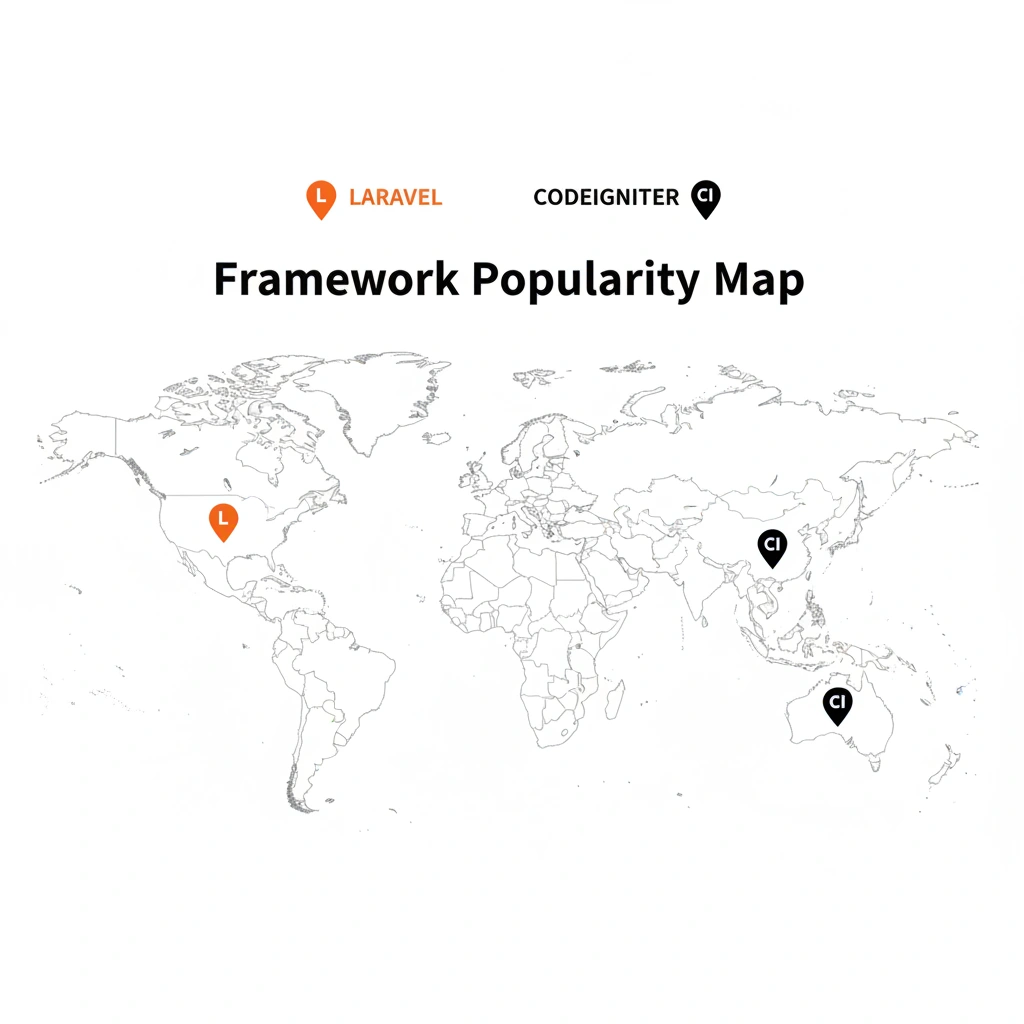
According to BuiltWith data, over 130,000 websites use Laravel, while around 115,000 use CodeIgniter. The choice depends on your project’s size, technical team, and long-term maintenance goals.