
You’ve got a great app idea. You’ve done some research. And now you’re staring at quotes that range from $10,000 to $500,000 with no clear explanation of why.
That’s the reality for most Texas business owners shopping for mobile app development. The pricing feels random. The jargon is confusing. And every agency seems to give you a different number.
This guide cuts through all of that.
We’ve put together a practical, no-fluff breakdown of mobile app development costs in Texas for 2026 including real pricing ranges, what drives those numbers, and how Dallas compares to other major tech markets.
Whether you’re a startup founder or a corporate decision-maker, you’ll walk away knowing exactly what to expect and what to ask.
And if you’re just starting out, we’d recommend reading our Mobile App Development Guide 2026 first. It covers the foundational concepts that will help the numbers here make a lot more sense.
| Mobile app development in Texas costs between $15,000 for a basic MVP and $500,000+ for a full enterprise solution. Dallas-based projects typically run 20–30% more affordable than equivalent work in California or New York. |
How Much Does Mobile App Development Cost in Texas?
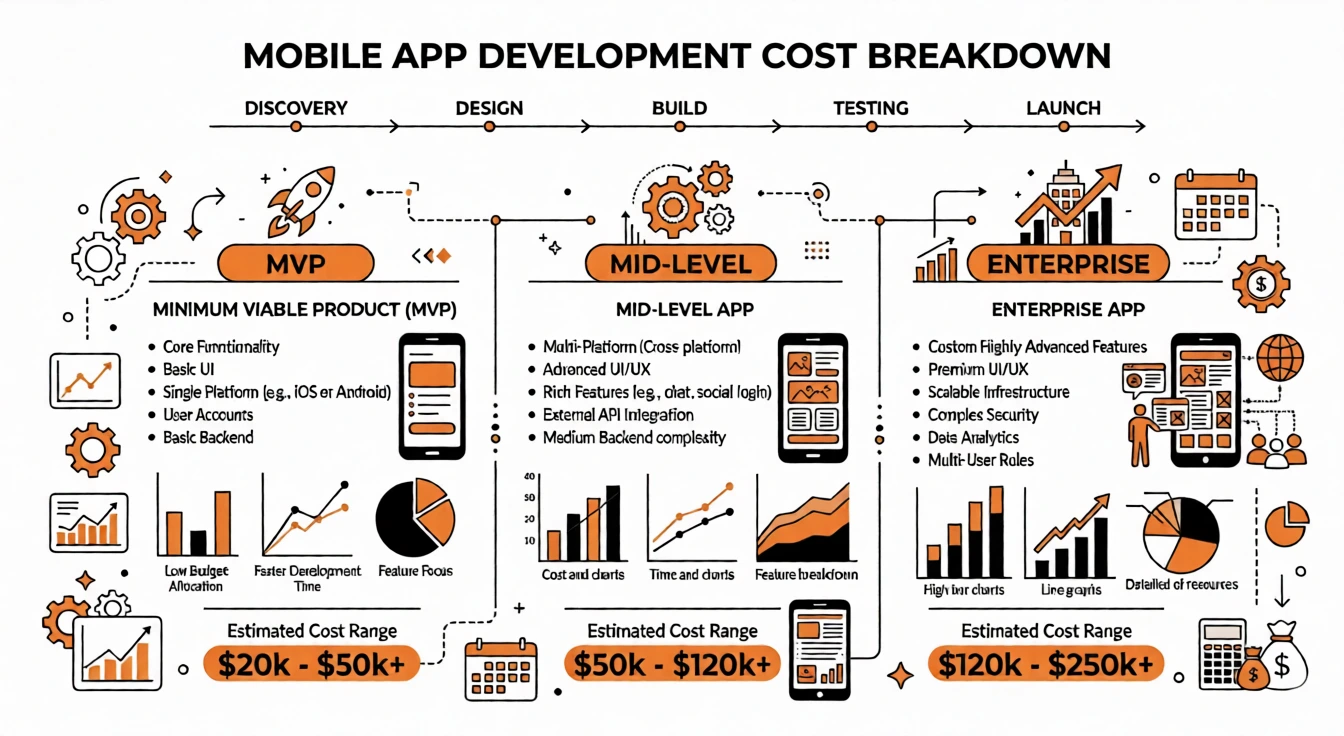
There’s no single answer, and anyone who gives you one without understanding your project is guessing. But here are the realistic ranges you should be working with in 2026.
| App Tier | Timeline | Cost Range (Texas) | Best For |
| Startup / MVP | 2–4 months | $15,000 – $50,000 | Idea validation, lean launch |
| Mid-Level App | 4–8 months | $50,000 – $150,000 | Growing businesses, real features |
| Enterprise / Complex | 8–18+ months | $150,000 – $500,000+ | Large teams, advanced systems |
What Does This Mean for Dallas Specifically?
Dallas has quietly become one of the most competitive tech markets in the country. The city is home to a dense ecosystem of mid-size agencies, independent studios, and freelance talent, which keeps pricing honest.
A mid-level app (think: user accounts, maps, real-time features, API integrations) built by a reputable Dallas development company typically lands between $60,000 and $130,000 in 2026. That’s a meaningful discount compared to Silicon Valley rates for comparable quality.
According to Clutch.co, Dallas ranks among the top 10 US cities for software development firms with a strong concentration of mobile-first agencies that service both local and national clients.
Key Factors That Affect App Development Cost
The gap between a $20,000 app and a $200,000 app almost always comes down to these six factors. Understanding them helps you scope your project intelligently and avoid paying for features you don’t actually need yet.
1. App Complexity
This is the single biggest driver of cost. A simple app with 3–5 screens and a clean user flow is a very different build than one with real-time data syncing, multi-user roles, and dynamic content.
- Simple: Static content, minimal logic, 5–10 screens
- Moderate: User accounts, API calls, basic backend, notifications
- Complex: Real-time features, third-party systems, custom algorithms, admin panels
2. Core Features
Every feature adds development hours. Some features cost more than others, not because they’re harder to design, but because the backend logic is complex.
High-cost features include real-time GPS tracking, in-app payments, video streaming, AI/ML functionality, multi-language support, and offline mode. Budget for these specifically, they’re not included in base estimates.
3. Platform Choice: iOS, Android, or Cross-Platform
- iOS only:
Fastest to build. Apple’s ecosystem is more controlled, which speeds up development. Good starting point for premium audiences.
- Android only:
Slightly more fragmented due to device variety, but dominant in global markets.
- Both natively:
Roughly 1.5–2x the cost of a single platform. Best quality, highest investment.
- Cross-platform (React Native / Flutter): Cross-platform (React Native / Flutter):
Build once, deploy to both. Costs 20–35% less than native for both. Widely used for MVPs and mid-level apps.
4. UI/UX Design
Design is not a line item, it’s a foundation. Poor UX costs you users. Good UX costs you money upfront but pays off in retention.
Expect to allocate 15–25% of your total app budget to design. For a $100,000 app, that’s $15,000–$25,000 just for wireframing, prototyping, and final UI. Don’t cut corners here.
5. Backend Infrastructure
Your app’s front-end is the interface. The backend is what powers its databases, servers, APIs, authentication systems, and business logic.
A simple backend (user login, basic data storage) is manageable. A robust backend that handles thousands of concurrent users, real-time data, and payment processing will add $20,000–$80,000+ to your budget depending on scale.
6. Third-Party Integrations
Every integration adds time. Payment gateways (Stripe, PayPal), mapping services (Google Maps), CRM tools (Salesforce, HubSpot), SMS/email platforms each one requires setup, testing, and error handling.
Budget an extra $2,000–$8,000 per major integration when planning your project scope.
Cost Breakdown by App Type
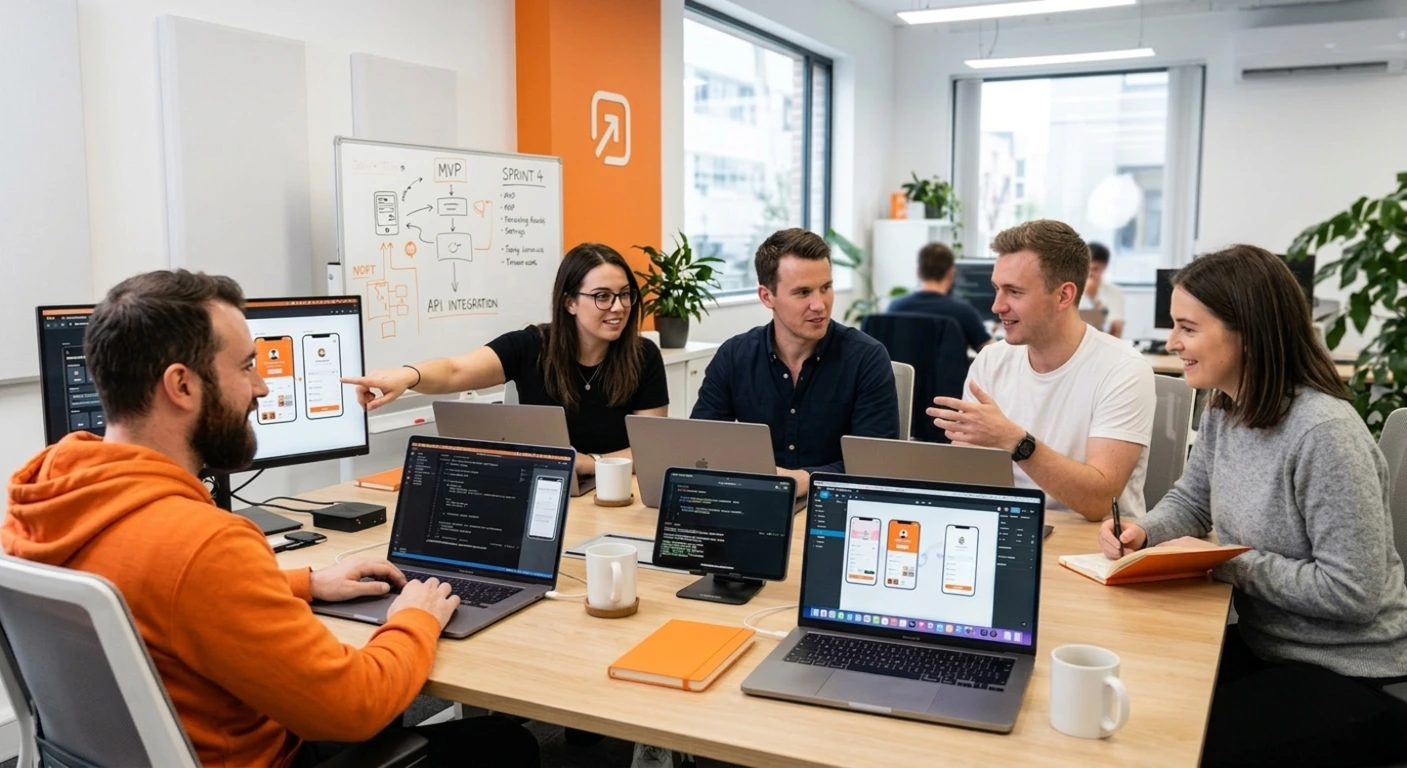
Different types of apps have different complexity profiles. Here’s what the real-world numbers look like across common categories:
| App Type | Estimated Cost | Key Features Driving Cost |
| Basic Utility App | $15K – $40K | Simple UI, 1–2 core functions, no backend complexity |
| E-Commerce App | $40K – $120K | Product catalog, payments, push notifications, order tracking |
| On-Demand App (Uber-style) | $80K – $250K+ | Real-time GPS, dual-sided UX, payment processing, admin panel |
| Enterprise App | $150K – $500K+ | Role-based access, API integrations, security layers, scalability |
A Note on On-Demand Apps
Apps like Uber, DoorDash, or TaskRabbit are deceptively complex. What looks simple to the user (tap, request, track) involves two separate user experiences (customer + service provider), real-time location data, dynamic pricing logic, payment splits, and a full admin dashboard for management.
To understand how these apps are actually built from the ground up, see our breakdown of Mobile App Development Lifecycle Stages, which walks through each phase in plain language.
Why Dallas Businesses Choose VirtueNetz
When Dallas businesses evaluate their options for mobile app development, partnering with the right team makes all the difference. VirtueNetz has become a trusted Texas app development company for organizations that value cost efficiency without compromising quality.
Local market understanding sets VirtueNetz apart. The team is well-versed in the business landscape across Dallas and the broader Texas region, from healthcare and logistics to retail and real estate, enabling them to build solutions tailored to your industry and audience.
Communication is seamless. With US-based project coordination, Dallas clients benefit from aligned time zones, clear reporting, and direct access to decision-makers throughout every phase of development.
Transparency is central to how VirtueNetz operates. Clients receive detailed project scopes, honest timelines, and structured pricing, so there are no surprises when it matters most.
Whether you’re a startup or an established enterprise, VirtueNetz delivers scalable mobile app development in Dallas that grows alongside your business goals. It’s practical, efficient, and built for long-term value.
Mobile App Development Cost in Dallas vs Other States
Location still matters even in a remote-first world. Hourly rates, overhead costs, and talent density vary significantly across US markets. Here’s how Texas stacks up:
| State | Avg. Hourly Rate | Mid-Level App Cost | Key Advantage |
| Texas (Dallas) | $100 – $150/hr | $50K – $150K | Value + talent density |
| California (SF/LA) | $150 – $250/hr | $100K – $300K | Largest talent pool |
| New York | $130 – $220/hr | $80K – $250K | Finance/fintech focus |
Texas and Dallas in particular, hit a sweet spot. You’re paying significantly less than California or New York rates while still accessing experienced, US-based talent who understand American business culture, compliance requirements, and user expectations.
According to GoodFirms, average US app development rates in 2025–2026 range from $100–$200/hour depending on location. Texas firms consistently come in at the lower-to-mid end of that range.
| Pro Tip: Don’t just compare hourly rates. Compare total project cost and value delivered. A $120/hr Dallas firm that finishes in 4 months often delivers better ROI than a $95/hr team that takes 8 months with constant revisions. |
Hidden Costs Most Businesses Ignore
The quote you get from a development agency is just the beginning. Here are the costs that catch most business owners off guard and how to plan for them.
App Maintenance & Bug Fixes
Once your app is live, the work isn’t done. Operating systems update. Devices change. APIs deprecate. Budget 15–20% of your initial development cost annually for ongoing maintenance.
For a $100,000 app, that’s $15,000–$20,000 per year minimum. This is non-negotiable, skip it and your app breaks.
Feature Updates & Version Releases
Users expect improvements. Competitors push updates. Staying relevant means regular feature additions, UI refreshes, and performance optimizations.
Most mature apps budget $2,000–$10,000 per month for continuous development, depending on how aggressively they’re growing.
Scaling & Infrastructure Costs
Your cloud hosting costs go up as your user base grows. AWS, Google Cloud, and Azure charge based on usage. A scrappy MVP running on minimal infrastructure might cost $100/month, but an app handling 50,000 daily active users could run $2,000–$10,000/month in infrastructure alone.
App Store Fees
- Apple App Store: $99/year developer account fee. Apple takes 15–30% of in-app purchases.
- Google Play Store: $25 one-time registration fee. Google also takes 15–30% of in-app revenue.
Factor these into your monetization model before launch. If you’re selling subscriptions or digital goods inside the app, these percentages significantly affect your unit economics.
Marketing & User Acquisition
This one surprises people most. You can build a perfect app and still fail if no one knows about it. Mobile app marketing, ASO (App Store Optimization), paid ads, influencer partnerships, email campaigns are cost centers of their own. It’s not part of your development budget, but it absolutely needs to be part of your go-to-market plan.
How to Reduce App Development Cost Without Compromising Quality
Smart cost management isn’t about finding the cheapest team. It’s about scoping intelligently and building in phases.
Start With an MVP
A Minimum Viable Product is not a cheap app, it’s a focused app. Build only the core features your users need to get value from day one. Validate demand. Then invest in the next phase.
An MVP approach can reduce your initial investment by 40–60% compared to building everything at once.
Prioritize Cross-Platform Development
Unless your business has a strong reason to go native on both platforms immediately, React Native or Flutter gives you 80–90% of native performance at 65–70% of the cost. It’s the standard choice for first-time app builders.
Fix Your Scope Before Development Starts
Scope creep, adding features mid-development, is one of the most expensive things that can happen to an app project. Every change after development begins costs 3–10x more than planning for it upfront.
Invest in a solid discovery phase. Wireframes, user flows, and a documented feature list save you money downstream.
Choose a Partner, Not Just a Vendor
A good development partner will push back when you’re over-scoping. They’ll suggest better solutions. They’ll help you prioritize features by impact, not just preference.
The cheapest quote rarely delivers the best ROI. Look for teams that ask smart questions about your business before they quote a price.
Plan for Phases
Phase 1: MVP launch, learn, validate.
Phase 2: Core improvements based on real user feedback.
Phase 3: Scale, monetize, expand.
This model spreads cost over time, lets real data drive your decisions, and dramatically reduces the risk of building the wrong thing.
Why Hiring a Texas-Based Development Company Makes Sense
If you’re a US-based business, especially in Texas, working with a Mobile App Development Company in Dallas offers advantages that go well beyond cost savings.
Same Time Zone, Real Communication
Offshore teams are often 8–12 hours ahead or behind US business hours. That means your questions sit overnight. Your sprint reviews happen at 7am. Your emergencies get answered the next day.
A Texas-based team operates on your schedule. You get real-time communication during business hours, which directly reduces miscommunication, project delays, and frustration.
US Compliance & Legal Familiarity
Data privacy laws like CCPA (and increasingly, Texas-specific privacy legislation) require development teams who understand US legal requirements. A Dallas-based team works within these frameworks daily. An offshore team often doesn’t.
Dallas-Specific Market Knowledge
Building an app for Texas users, whether in healthcare, real estate, energy, or retail benefits from a team that actually understands the market. User behavior, regional preferences, and local business dynamics matter when you’re making UX decisions.
Accountability & Transparency
When things go wrong (and they occasionally do in any development project), having a US-based team with physical offices, reachable leadership, and legal accountability is a fundamentally different experience than dealing with a remote offshore vendor.
| Texas has seen massive tech investment growth in recent years. Dallas, Austin, and Houston now host hundreds of established tech firms. The talent pool is deep, and you don’t need to go to California to find world-class engineers. |
Frequently Asked Questions
How much does it cost to build a mobile app in Texas in 2026?
Mobile app development in Texas ranges from $15,000 for a basic MVP to $500,000+ for a full enterprise application. A typical mid-level app with real features, user accounts, payments, API integrations usually costs $50,000–$150,000 built by a Dallas-area firm.
Is it cheaper to build an app in Texas vs California?
Yes, significantly. Texas-based firms typically charge $100–$150/hour compared to $150–$250/hour in California. On a $100,000 project, that can translate to $30,000–$50,000 in savings for equivalent quality.
How long does it take to build a mobile app?
The timeline depends on complexity: a focused MVP can ship in 2–4 months, a mid-level app takes 4–8 months, and a large enterprise system can take 12–18 months or more. Timeline directly affects cost; longer builds mean more developer hours.
What is the biggest hidden cost in app development?
Ongoing maintenance. Most businesses budget for the build but not for what comes after. Expect to spend 15–20% of your initial development cost every year just to keep the app updated, secure, and functioning on new OS versions.
What factors affect mobile app development cost?
Mobile app development cost depends on several key factors such as app complexity, features, and platform choice (iOS, Android, or both). More advanced features like real-time updates, payments, or AI increase development time and cost.
Final Thoughts
Building a mobile app in Texas in 2026 is a real investment, but it’s one of the highest-leverage decisions a growing business can make.
The cost confusion you felt at the start of this article is normal. Every project is different. But now you have a framework: understand your app tier, know what drives cost, plan for what comes after launch, and choose a partner who can guide you through the process.
Texas and Dallas, in particular gives you access to exceptional development talent at a cost that makes business sense. You don’t need a Silicon Valley budget to build a world-class product.
| Ready to build your app? Get a transparent, no-obligation quote from our Dallas-based team. We’ll review your idea, help you scope it correctly, and give you a realistic number, not a ballpark designed to win the deal. → Talk to a Mobile App Expert Today |