Generative AI is no longer a futuristic concept — it’s a core driver of innovation across industries. From automating content creation to streamlining workflows and boosting decision-making, businesses are quickly realizing the power of this technology.
But here’s the challenge: simply adopting generative AI isn’t enough. Without a proper generative AI integration process, companies risk wasting resources and missing out on the true value AI can deliver.
In this guide, we’ll break down how to integrate generative AI into your business, the steps involved, and best practices for building a sustainable AI implementation strategy. Whether you’re just starting or looking to optimize your generative AI workflow, this roadmap will help you move forward with confidence.
What is Generative AI Integration?
Generative AI integration is the process of embedding AI models into your existing business systems, tools, and processes to enhance productivity, innovation, and efficiency.
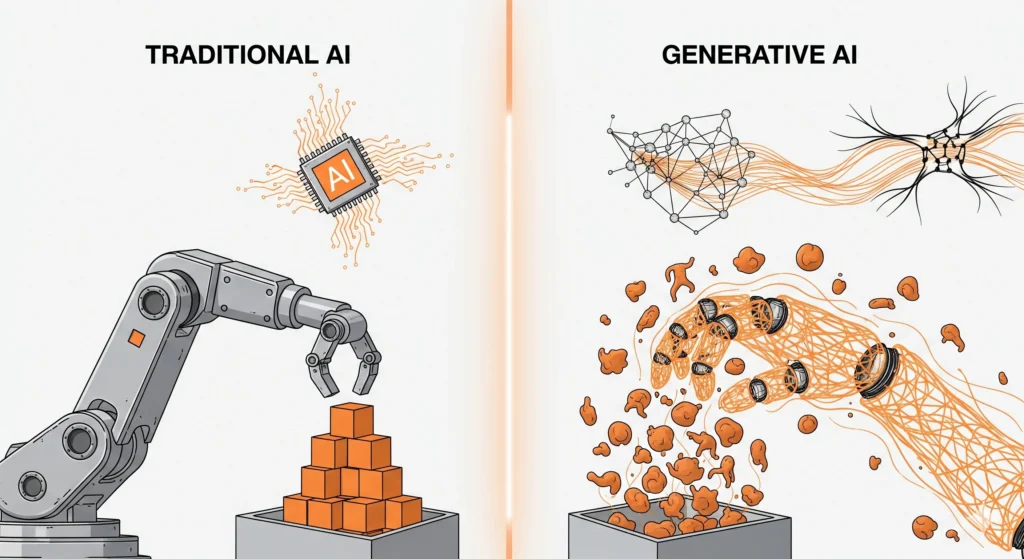
Unlike traditional AI, which focuses on analysis and prediction, generative AI creates new data and outputs — such as text, images, code, product designs, or even business insights.
Example Use Cases:
- Marketing: Automatically generating ad copy, blog content, and social media visuals.
Related service: AI Marketing Consultant in Dallas to create targeted AI-driven marketing strategies.
- E-commerce: AI-driven product recommendations and personalized shopping experiences.
Explore our Fashion Store AI Chatbot Development to boost customer engagement.
- Healthcare: Creating personalized treatment plans using patient data.
- Finance: Automating fraud detection with real-time pattern recognition.
Related Resource: Learn how AI Agents for Logistics are transforming supply chain operations.
Why a Strategic AI Integration Process Matters
Jumping straight into AI adoption without a plan often leads to:
- Misaligned business goals
- Security vulnerabilities
- Poor user experience
- Wasted investments
By following a structured AI implementation strategy, you can:
- Align AI with business objectives
- Reduce risks and costs
- Create measurable ROI
- Ensure seamless adoption by employees and stakeholders
Traditional vs. Modern AI Integration
|
Traditional AI Approach |
Generative AI Integration |
| Focused on data analysis and automation | Focused on creation, innovation, and adaptability |
| Manual setup of rules and algorithms | AI models learn and improve over time |
| Limited personalization | Hyper-personalized outputs and experiences |
| Siloed implementation in one department | Cross-department collaboration and integration |
| Long development cycles | Faster deployment with cloud-based AI models |
Key takeaway: Modern generative AI offers flexibility and scalability, but it requires a forward-thinking approach to truly transform your workflows.
Step-by-Step Generative AI Integration Process
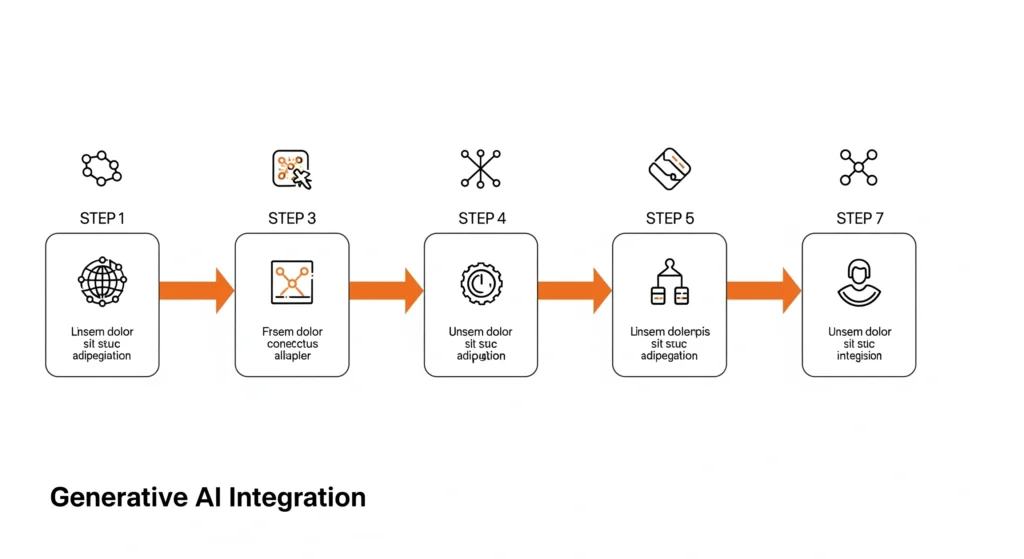
Step 1: Identify Business Needs and Goals
Before jumping into implementation, determine why you need generative AI.
- Are you trying to improve customer service?
- Automate repetitive tasks?
- Generate new product ideas?
Example:
A retail company might aim to reduce product description writing time by 70% using AI-generated content.
Pro Tip: Consider a partner like AI Development Company Charlotte to identify and align AI projects with your core business goals.
Step 2: Evaluate Your Current Workflow
Analyze your existing systems and processes to spot areas where AI can add value.
- Which tasks are time-consuming or repetitive?
- Where are there data bottlenecks or inefficiencies?
- What tools or platforms do you currently use?
This evaluation helps you design a generative AI workflow that fits seamlessly into your operations.
For specific industries, AI Automation Solutions for Electronics Manufacturing and AI Automation for Medical Equipment Manufacturing can address unique production challenges.
Step 3: Choose the Right AI Model or Platform
Not all generative AI tools are created equal. Select a platform based on:
- Scalability: Can it grow with your business?
- Data privacy & compliance: Essential for industries like healthcare and finance.
- Integration options: APIs, plugins, or custom development.
- Cost structure: Pay-as-you-go or subscription models.
Popular Generative AI Tools:
- ChatGPT / OpenAI GPT models – Natural language generation
- Midjourney / DALL·E – Image creation
- Runway ML – Video and multimedia generation
- Vertex AI (Google) – Enterprise-level AI solutions
Businesses can explore enterprise-grade services like AI/ML Development in Washington DC to implement customized AI tools.
Step 4: Develop a Data Strategy
Generative AI thrives on quality data. Poor data leads to irrelevant or biased results.
- Clean and organize your datasets.
- Ensure compliance with data privacy laws like GDPR or HIPAA.
- Decide whether you’ll use internal data, third-party data, or a hybrid approach.
Tip: Start with smaller datasets, then expand as the AI system learns and adapts.
Step 5: Build and Test a Prototype
Start with a pilot project before full-scale deployment.
- Choose a low-risk area to test the AI model.
- Gather feedback from real users.
- Measure performance metrics like accuracy, speed, a
- nd ROI.
Example: A Chatbot Development Agency in Toronto could help businesses test conversational AI prototypes before scaling globally.
Step 6: Integrate into Existing Systems
Once your prototype is successful, integrate it into your business tools and platforms.
- Use APIs for seamless connection.
- Provide employee training to ensure smooth adoption.
- Set up human-in-the-loop workflows where AI assists but final decisions are made by people.
Example:
A customer service chatbot generates replies, but agents approve them before sending during the initial stages.
Step 7: Monitor, Optimize, and Scale
Generative AI isn’t a “set it and forget it” solution.
- Regularly review performance metrics.
- Update models with new data.
- Scale successful workflows across other departments.
Key metrics to track:
- Customer satisfaction scores
- Operational costs saved
- Time saved per task
- Revenue growth linked to AI-driven initiatives
When scaling, partnering with a Generative AI Development Company in Boston can ensure smooth expansion into multiple business areas.
Best Practices for a Smooth Generative AI Integration
- Start Small, Then Scale – Begin with a single department or process.
- Involve Stakeholders Early – Get leadership and team buy-in from day one.
- Prioritize Security – Use encryption and secure APIs to protect sensitive data.
- Maintain Human Oversight – AI should assist, not completely replace, human decision-making.
- Focus on User Experience – Ensure AI interactions feel natural and intuitive.
Real-World Example: Generative AI in E-commerce
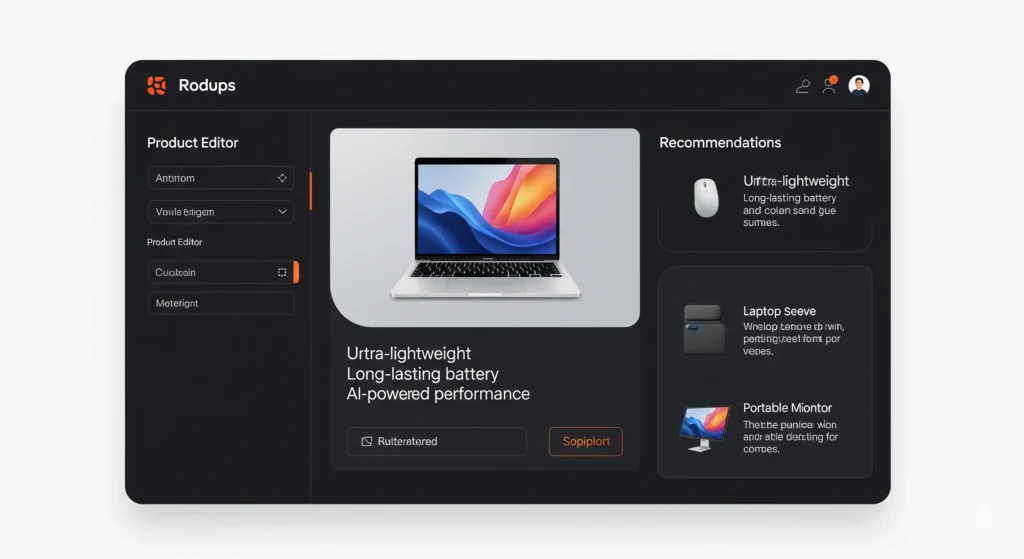
Challenge:
An online fashion retailer struggled with creating unique product descriptions for thousands of SKUs.
Solution:
By integrating a generative AI content tool, they:
- Reduced content creation time by 80%
- Increased SEO rankings with keyword-rich descriptions
- Boosted conversion rates by 15% through personalized product recommendations
FAQs about Generative AI Integration Process
- What is a generative AI workflow?
A generative AI workflow is the structured process of data collection, model training, integration, and monitoring that enables AI systems to generate valuable outputs like text, images, or insights. - How long does it take to integrate generative AI into a business?
It depends on the scope. A pilot project might take 4–8 weeks, while full-scale deployment could take several months. - Is generative AI secure for businesses?
Yes, if implemented with proper data privacy measures, encryption, and compliance with relevant regulations. - Do I need coding skills to integrate AI?
Not necessarily. Many AI platforms offer low-code or no-code solutions for seamless integration.
Conclusion: Future-Proof Your Business with Generative AI
The generative AI integration process is more than just installing a tool — it’s about creating a strategy that aligns with your goals, empowers your teams, and delivers measurable results.
By following the steps outlined in this guide, you can design a generative AI workflow that enhances innovation and efficiency while staying ahead of competitors.
Next Step: Ready to integrate generative AI into your business?
Contact VirtueNetz to build a custom AI implementation strategy that drives growth and innovation.
 ?>
?>
 ?>
?>
 ?>
?>
 ?>
?>
 ?>
?>