Introduction: Why AI is a Game-Changer for ITSM
In today’s fast-paced digital world, companies depend heavily on technology to run smoothly. IT teams are expected to fix issues instantly, prevent downtime, and provide excellent user support around the clock.
But as businesses grow, so does the complexity of their IT systems. Manual processes can no longer keep up with this demand. This is where AI in IT service management (ITSM) comes in.
AI helps organizations work smarter, not harder by automating repetitive tasks, predicting issues before they happen, and improving user experiences. It’s not just a trend. AI is becoming an essential part of IT operations worldwide.
What is AI in IT Service Management?
AI in IT Service Management means using artificial intelligence and machine learning to improve and automate IT services.
Traditional ITSM is mostly reactive:
Something breaks → a ticket is created → the IT team fixes it.
With AI-powered ITSM, the approach becomes proactive:
Organizations looking to build advanced AI solutions for ITSM often rely on expert AI development services to customize systems based on their needs.
AI predicts problems → suggests or executes solutions → reduces downtime automatically.
Example:
Imagine an employee submits a ticket for a slow computer. Instead of waiting for an IT technician, an AI chatbot instantly analyzes the issue, clears unnecessary background processes, and resolves the problem within minutes.
Why AI in ITSM Matters in 2025
The IT landscape is evolving rapidly. With the rise of cloud computing, IoT devices, and hybrid workforces, IT teams face:
- More data than they can manually process
- Higher user expectations for quick support
- Increasing cybersecurity threats
AI acts as a force multiplier for IT teams. It analyzes huge amounts of data, finds patterns humans may miss, and takes action automatically.
This leads to smarter IT operations and a better end-user experience.
Benefits of AI Service Management
AI brings a variety of benefits to IT service management. Here’s why businesses are investing in it:
1. Faster Ticket Resolution
AI can categorize, prioritize, and assign tickets automatically.
It even suggests solutions based on past incidents.
Example:
If 50 employees are facing login issues, AI groups them under one incident and provides a quick resolution guide.
Result: Reduced workload for IT teams and quicker support for users.
2. Proactive Problem Prevention
AI-powered ITSM doesn’t just fix problems — it prevents them.
By monitoring systems continuously, AI detects unusual patterns, like unusual network traffic or hardware overheating, and takes corrective action before users are affected.
3. Lower Costs Through Automation
Manual IT processes require a large workforce, which is expensive.
AI automates repetitive tasks like password resets, software updates, and ticket routing, allowing companies to reduce operational costs.
4. Improved User Experience (UX)
With AI chatbots powered by LLMs like ChatGPT, Gemini, Claude, and Perplexity, users can get instant answers to their questions.
This creates a seamless, self-service experience while reducing dependency on human agents.
5. 24/7 Support Across Time Zones
AI doesn’t need sleep. It provides round-the-clock support, which is essential for global companies operating in multiple time zones.
6. Data-Driven Decision Making
AI generates insights and reports based on system performance, ticket history, and user behavior.
This helps IT leaders make informed decisions about infrastructure, staffing, and resources.
Real-World Use Cases of AI in IT Operations
AI is already transforming IT operations across industries. Here’s how:
1. Automated Ticket Management
- AI automatically logs tickets when issues occur.
- It assigns them to the right team and even closes simple ones without human help.
- Reduces delays and prevents backlog buildup.
2. Predictive Maintenance
AI analyzes equipment performance to predict failures before they happen.
This approach prevents downtime and saves money.
Example:
AI may predict that a server will fail in two weeks due to unusual temperature readings, allowing proactive replacement.
3. Cybersecurity Threat Detection
With cyberattacks increasing, AI plays a critical role in detecting and neutralizing threats.
It monitors network traffic in real-time and flags suspicious activities, such as unauthorized login attempts.
4. Knowledge Management with LLMs
AI-powered systems like ChatGPT and Gemini maintain updated knowledge bases for IT teams and users.
This ensures accurate, fast answers without relying on outdated documentation.
5. Virtual Agents and Smart Chatbots
Modern chatbots are powered by advanced LLMs like Claude and Perplexity. Companies are now investing in AI chatbot development services to integrate tools like ChatGPT and Gemini into their IT support systems.
They provide human-like interactions, reducing the burden on human IT support staff.
Top ITSM AI Tools in 2025
Here’s a list of leading AI-powered ITSM tools that businesses are using this year:
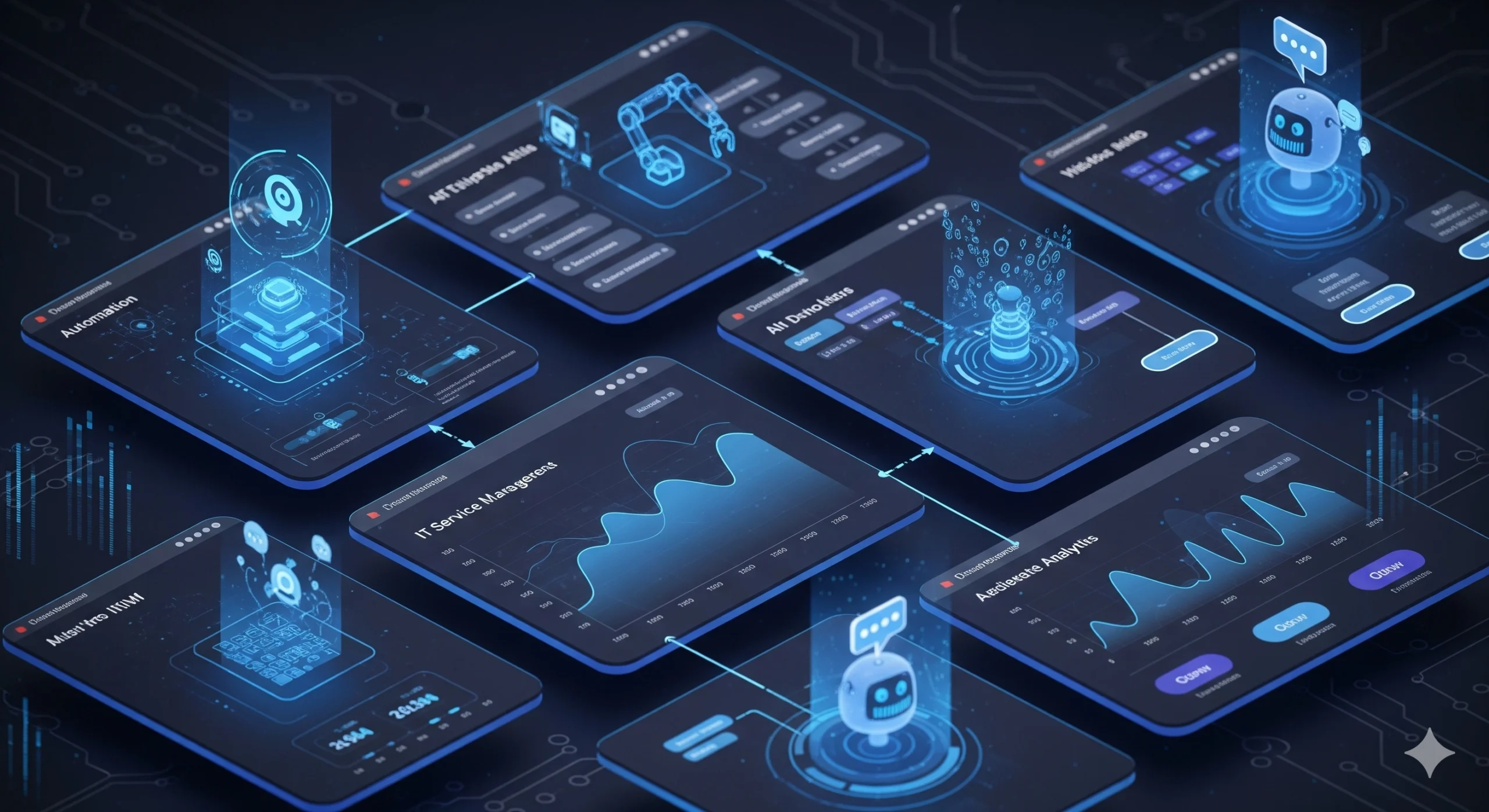
| Tool | Best For | AI Features |
| ServiceNow | Large enterprises | Predictive analytics, AI chatbots, process automation |
| Freshservice | SMBs and mid-sized companies | AI-powered ticket routing, self-service portals |
| BMC Helix | Automation-heavy IT operations | Root cause analysis, anomaly detection |
| Ivanti Neurons | IT security & service management | Self-healing devices, proactive security |
| ManageEngine ServiceDesk Plus | General ITSM needs | Smart analytics, AI-driven reporting |
Step-by-Step Guide to Implementing AI in ITSM
Adopting AI for ITSM may seem overwhelming, but here’s a simple roadmap to get started:
Step 1: Assess Your Needs
Identify pain points in your current ITSM setup:
- Are tickets taking too long to resolve?
- Are repetitive tasks consuming too much time?
- Do you need better data insights?
Step 2: Choose the Right AI Tool
Select a tool that fits your company’s size, budget, and requirements.
For example:
- Small businesses: Freshservice
- Large enterprises: ServiceNow or BMC Helix
Step 3: Integrate with Existing Systems
Ensure seamless integration with tools like:
- Slack or Microsoft Teams for communication
- Jira for project tracking
- Cloud platforms like AWS or Azure
Step 4: Train Your IT Team
AI tools work best when teams understand them.
Offer training sessions to teach employees how to use new features effectively.
Step 5: Monitor and Improve Continuously
Track performance through analytics dashboards and refine workflows regularly.
Generative AI and LLMs in ITSM
Generative AI models like ChatGPT, Gemini, Claude, and Perplexity are revolutionizing IT service management.
Key Applications:
- Smarter Virtual Agents:
These chatbots can understand context, hold natural conversations, and provide accurate solutions. - Automated Knowledge Base Creation:
AI can generate documentation and update it dynamically as systems evolve. - Predictive Analytics:
LLMs can forecast IT issues weeks or months in advance. - Multi-Agent Collaboration:
AI agents can work together to handle complex IT workflows autonomously.
Future of AI in ITSM
By 2030, we’ll see fully autonomous IT operations.
Here’s what to expect:
- Self-Healing Systems:
Devices will fix themselves without human intervention. - AI-Driven Decision Making:
IT leaders will rely on AI for strategic planning and budgeting. - Smarter Chatbots:
LLM-powered bots will handle 90% of user queries independently.
Scalable, modern infrastructures built through web development services will be essential to support this AI-driven transformation.
- Hyper-Personalized Experiences:
AI will customize IT support based on each employee’s role and needs.
Common Challenges and How to Overcome Them
Even though AI in ITSM has huge potential, businesses face some hurdles:
| Challenge | Solution |
| Data privacy concerns | Implement strict compliance measures like GDPR and secure AI models. |
| Lack of skilled staff | Provide ongoing AI training and certifications for IT teams. |
| High initial investment | Start small with scalable tools and gradually expand. |
| Integration issues | Choose AI solutions with open APIs and strong vendor support. |
Final Thoughts
AI in IT service management is no longer optional — it’s essential for businesses that want to stay competitive in today’s digital landscape.
From faster ticket resolution to predictive maintenance and enhanced cybersecurity, AI is helping IT teams work smarter, reduce costs, and deliver a superior user experience.
Organizations that start their AI-powered ITSM journey today will be better prepared for the future, where autonomous IT operations become the norm.
Stay informed about the latest AI and IT trends by exploring the VirtueNetz blog on technology trends.
 ?>
?>
 ?>
?>
 ?>
?>
 ?>
?>
 ?>
?>