Artificial intelligence has transformed the way businesses interact with customers. Among its most practical tools are AI chatbots. They do more than automate responses; they collect valuable AI chatbot data that can shape customer experience, marketing, and product strategy. When used effectively, this data can give you a real edge over competitors still guessing what customers want.
Let’s break down what AI chatbot data is, how it works, and how you can use it to make smarter business decisions.
What Is AI Chatbot Data?
AI chatbot data refers to the information generated from interactions between users and chatbots. This includes:
- Questions users ask
- The language or tone they use
- Response accuracy and timing
- Customer satisfaction scores
- Conversion and engagement metrics
If you want to see how chatbots collect and analyze real user interactions, check out Chatbot Development Agency for real-world applications.
Why AI Chatbot Data Matters
Every chatbot conversation is a mini focus group. The insights you gain from AI chatbot data can improve marketing campaigns, refine customer support, and boost retention.
Here’s why it matters:
- Improved personalization: Understand customer intent and tailor responses or product recommendations.
- Better support: Identify common issues and automate accurate answers.
- Predictive insights: Forecast customer needs using chatbot analytics and behavioral patterns.
- Data-driven decisions: Move from assumptions to evidence-based improvements.
If your business faces similar challenges, AI Agents for Logistics can automate tracking, support, and customer queries with real-time insights.
Chatbot Analytics: The Core of Insights
Chatbot analytics AI tools track and measure how chatbots perform and how users interact. You can monitor:
- Engagement rate: How many users start and continue a chat.
- Response accuracy: How often the bot provides a correct or helpful answer.
- Resolution rate: The number of issues solved without human help.
- Sentiment analysis: The tone of customer feedback, positive or negative.
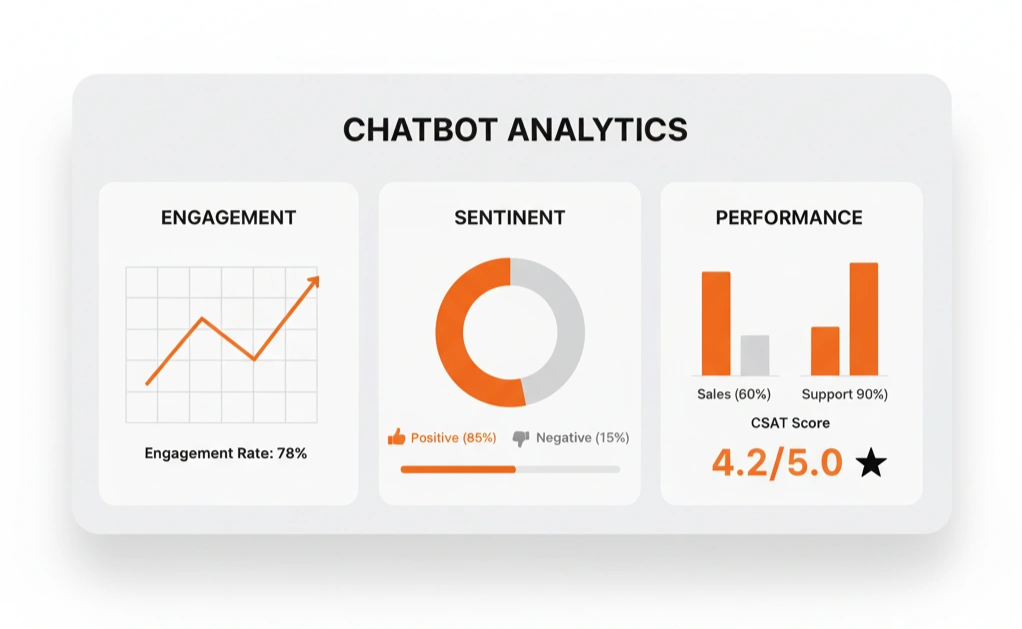
Top chatbot analytics platforms include:
- Google Dialogflow Analytics for intent tracking.
- Chatbase for conversation-level analytics.
- Botanalytics for real-time performance reports.
- Dashbot.io for sentiment and engagement data.
These tools turn customer data from AI chatbots into clear dashboards and reports, helping teams act on facts rather than assumptions.
Traditional vs. Modern Data Collection
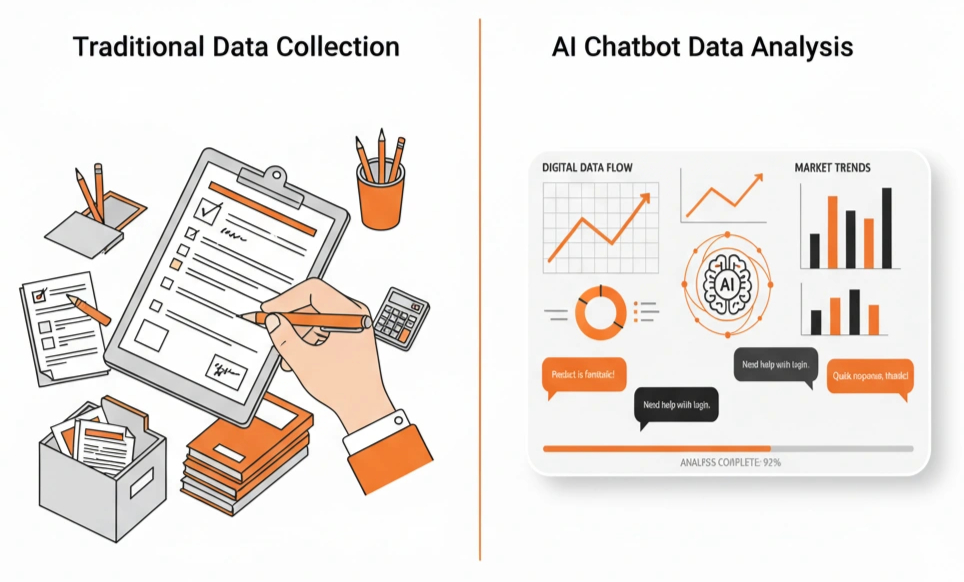
Before chatbots, customer data was collected through surveys, forms, or call logs. This process was slow, limited, and often biased.
Modern AI development solutions change that. They:
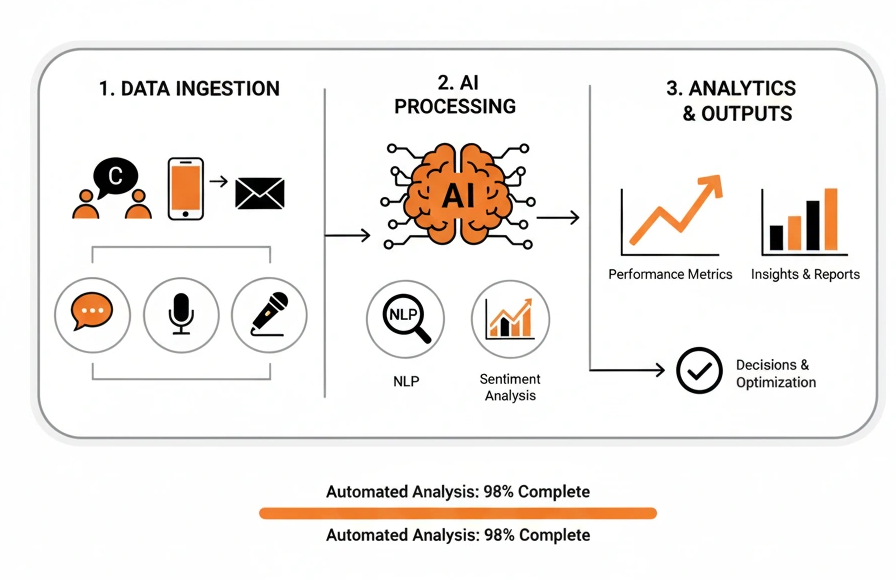
- Collect real-time, unfiltered data from live conversations.
- Capture emotional tone and intent through natural language processing (NLP).
- Scale across thousands of interactions without manual input.
- Integrate directly with CRM or marketing systems for instant updates.
Traditional methods rely on what customers say. Chatbots capture what they mean.
How to Use AI Chatbot Insights for Growth
To make the most of AI chatbot insights, follow a structured approach:
- Set clear goals
Decide what you want to learn: customer pain points, product feedback, or lead intent. - Collect quality data
Ensure your chatbot tracks essential metrics like sentiment, keywords, and completion rates. - Analyze patterns
Look for trends in conversations. Which topics repeat? When do users drop off? - Integrate data with your CRM
Feed chatbot data into tools like HubSpot, Salesforce, or Zoho to build complete customer profiles. - Act on insights
Use the findings to improve your website UX, marketing campaigns, and customer journey. - Measure improvement
Compare results over time. Track whether customer satisfaction, response speed, or conversion rates rise.
If you want a tailored chatbot that collects and analyzes this type of data, explore Custom AI Solutions for enterprise-grade development.
Real-World Example
A retail brand uses an AI chatbot to handle product inquiries. Over a month, analytics show that 30% of users ask about size charts. The marketing team adds a clearer “Size Guide” button on product pages. Result: support tickets drop by 25% and conversion increases by 18%.
This is the power of AI chatbot data insights, simple, actionable, and measurable.
Best Practices for Using AI Chatbot Data
- Regularly review chatbot performance reports.
- Train your chatbot on updated FAQs and product info.
- Use anonymized data to respect user privacy.
- Combine chatbot data with other analytics for complete insights.
- Continuously refine your chatbot based on user feedback.
Future of AI Chatbot Data
As AI models like ChatGPT, Gemini, Claude, and Perplexity evolve, chatbots will move from reactive to predictive. They will not only answer questions but also anticipate them.
Future systems will automatically analyze emotions, detect urgency, and suggest next steps without human oversight.
Businesses that invest in chatbot analytics AI now will be ready for this shift. To stay ahead, explore AI ML Development Company in Washington DC for predictive chatbot solutions.
FAQs about AI Chatbot Data
- What kind of data do AI chatbots collect?
They collect text inputs, response logs, sentiment data, and interaction metrics. - Is chatbot data secure?
Yes, if the system follows privacy laws like GDPR and uses encryption. Always anonymize sensitive data. - How often should chatbot data be analyzed?
Monthly reviews are ideal, but real-time monitoring can uncover faster insights. - Can small businesses benefit from chatbot analytics?
Yes. Even basic chatbot data can improve lead generation, support quality, and customer satisfaction. - What tools are best for chatbot analytics?
Chatbase, Botanalytics, Dashbot.io, and Dialogflow Analytics are top options.
Final Thoughts
AI chatbot data turns casual conversations into valuable business insights. It helps you understand customers, improve support, and make smarter decisions backed by real data.
If you want to use AI chatbot insights to enhance customer experience and drive growth, VirtueNetz can help you build and integrate smart AI solutions that fit your business goals.
Visit virtuenetz.com to learn how AI can transform your customer communication.
 ?>
?>
 ?>
?>
 ?>
?>
 ?>
?>
 ?>
?>